
Mesut Saka 1
1 Department of Pediatrics, Usak University Faculty of Medicine, Usak, Turkey.
Received: 30 May 2024
Revised: 2 June 2024
Accepted: 2 Jun 2024
Published: 2 Jun 2024
Corresponding author:
Mesut Saka.
Department of Pediatrics, Usak University Faculty of Medicine, Usak, Turkey.
mesut.saka@usak.edu.tr ORCID: 0009-0008-4644-2759
ABSTRACT
| This case report presents a 17-month-old male diagnosed with Kawasaki disease, a condition characterized by medium-vessel vasculitis predominantly affecting children under seven. The patient, initially presenting with a three-day fever, maculopapular rash, and conjunctivitis, tested positive for Influenza A. Despite initial treatment with oseltamivir, pheniramine maleate, methylprednisolone, and cefotaxime, the patient’s symptoms escalated, with recurrent fever, elevated leukocyte counts, and increased inflammatory markers. Notable clinical findings included strawberry tongue, hand and foot edema, and tachycardia, confirming Kawasaki disease. Following the administration of intravenous immunoglobulin, the patient showed significant clinical improvement. Subsequent echocardiograms and laboratory tests indicated normalization of inflammatory markers and cardiac function. This case underscores the importance of early recognition and intervention in Kawasaki disease to prevent severe cardiovascular complications. |
Keywords:
Kawasaki, influenza, H1N1
Cite as:
Saka M. Kawasaki Associated with Influenza. Acta Med Eur. 2024;6(3):74-76. doi: 10.5281/zenodo.11423305
INTRODUCTION
Odor is the most developed sense that ensures emotional ties Kawasaki disease is a mid-vessel vasculitis that usually affects children under the age of 7 and presents with refractory fevers. Although its etiology is not clear, its association with viral infections can be seen in children with genetic predisposition(1). It was also reported during the influenza (H1N1) pandemic in 2009. Today, it is one of the leading acquired heart diseases in children(2). In the clinic of Kawasaki disease, in addition to fever lasting more than five days, edema in the hands and feet, peeling of the fingers and toes, maculopapular rash, non-purulent conjunctivitis and cervical lymphadenopathy may be observed(3). The most feared complications are myocarditis and coronary artery aneurysm(4).
CASE
A 17-month-old male patient (a doctor’s child) was admitted in May 2023 with complaints of fever lasting 3 days, new-onset maculopapular rash, and conjunctivitis.
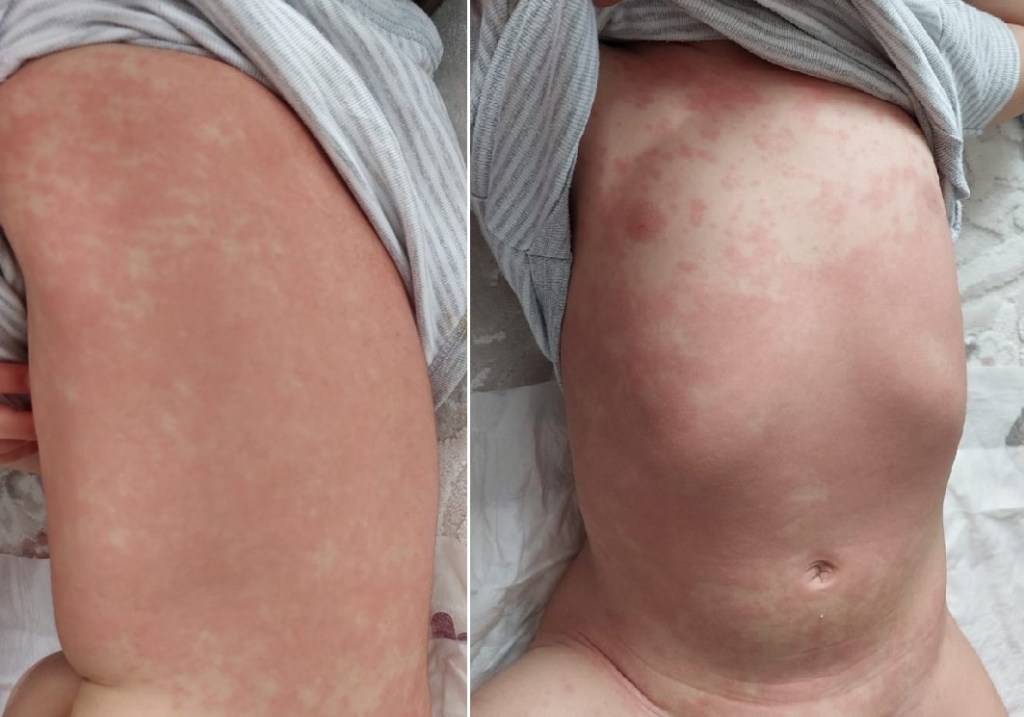
Figure 1. Diffuse maculopapular rash (persisted for approximately 5 days after symptom onset).
It was learned that Influenza A was detected in the rapid test performed at an external center. On examination, the general condition was moderate, active, not septic, and poor. Inspection revealed non-purulent conjunctivitis and widespread maculopapular rash. No lymphadenopathy was detected. Other system examinations were normal. Hemogram and biochemistry were studied in the blood samples upon arrival, and no additional pathology was detected except for the CRP level being 156 mg/L (0.1-5) (procalcitonin was also negative). Cmv, Rubella and Ebv Ig M levels were negative. Complete urinalysis was found to be normal, and there was no growth in the urine culture. Oseltemavir was started. For his rashes, pheniramine maleate and methylprednisolone were started at 1 mg/kg/day. Cefotaxime was started empirically. Local eye treatments were applied for conjunctivitis. On the 3rd day of his hospitalization, his fever went down and did not rise above 38 degrees. His rashes and conjunctivitis symptoms regressed. Pheniramine maleate and methylprednisolone were stopped. Other treatments continued. Within 24 hours, he had a fever over 38.5 ͑C again. Control examinations were sent. The total leukocyte count increased to 29X10^3 /µl (neutrophil 23X10^3/ µl). ALT increased to 204 U/L, AST increased to 91 U/L, and CRP increased to 211 mg/L. Sedimentation was measured at 52 mm/h. Albumin dropped to 3.4 (g/dL). Abdominal ultrasound was reported as normal. In addition to his current clinical condition, the patient was consulted to pediatric cardiology with the preliminary diagnosis of Kawasaki due to strawberry tongue and hand and foot edema.
As a result of pediatric cardiology examination; Trace pericardial effusion and tachycardia (184 beats/min) were detected. The patient was diagnosed with Kawasaki disease because he had a fever over 38.5°C for more than five days, non-purulent conjunctivitis, maculopapular rash, strawberry tongue and hand and foot edema. Intravenous immunoglobulin was given at 2 g/kg in accordance with the current treatment protocol. Dramatic clinical response was achieved after treatment. After 24 hours of fever-free monitoring, he was discharged with oral cefdinir treatment as he had no additional complaints. After discharge, 80 mg/kg/day acetyl salicylic acid and stomach protectant were added to his treatment. The CRP of the patient, whose control examinations were taken 4 days later, decreased to 8 mg/L. Leukocytosis regressed. Sedimentation decreased to 34 mm/h.
A follow-up echocardiogram was taken and the acetyl salicylic dose of the patient was reduced to the antiplatelet dose and continued. In his clinic, it also started to be accompanied by peeling on the fingers, approximately 8 days after the onset of symptoms. The control transthoracic echocardiography taken approximately three weeks later was evaluated as normal.
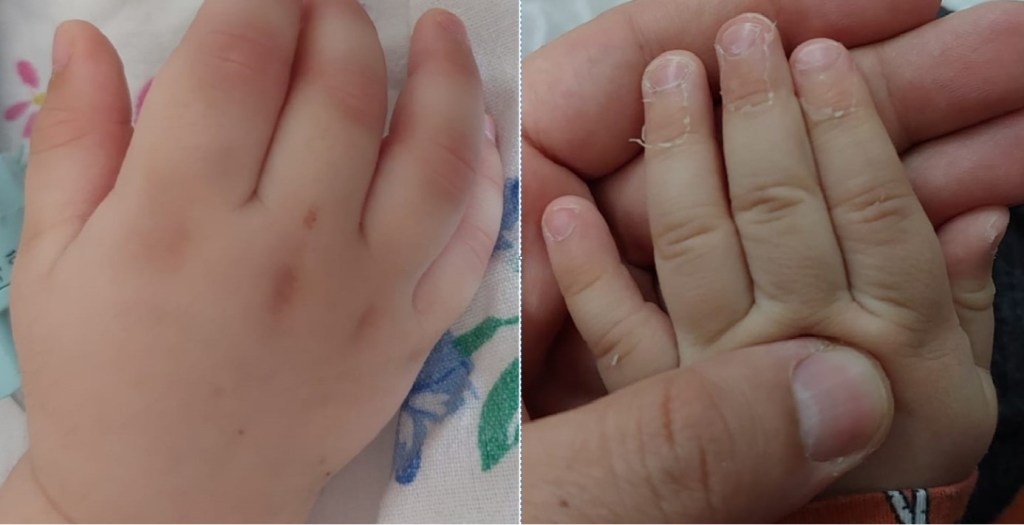
Figure 2. Edema in the hand that develops approximately 5 days after the onset of symptoms and peeling of the fingertips that develops approximately 7 days after the onset of symptoms.
DISCUSSION
Kawasaki disease is a systemic inflammatory disease characterized by refractory fevers of unknown etiology. Their association with some viral diseases (influenza, parainfluenza, adenovirus, rhinovirus, enterovirus, etc.) has been shown(5,6). Influenza-associated Kawasaki Disease has been rarely reported in the literature(7,8). Since Kawasaki Disease is common in Japan, epidemiological studies often originate from Japan. It has been reported that cardiac complications have decreased in recent years as the disease has become more recognized(9). Some studies have shown that influenza pandemics reduce the frequency of Kawasaki Disease(10).
Our case was diagnosed and followed up during the period when there was no influenza pandemic in our country, but sporadic influenza cases were observed (May-2023, TURKEY). As it is known, fever that can last up to five days is common in influenza.
Prolonged fever is also among the diagnostic criteria for Kawasaki Disease. Our case was initially treated for influenza due to the presence of prolonged fever and diagnosed influenza, and the diagnosis was revised as Kawasaki Disease due to the presence of hand-foot edema, deterioration in tranaminases, increase in acute phase reactants and the presence of hypoalbuminemia.
After the diagnosis was made (6 days after the first fever), intravenous immunoglobulin treatment at 2 g/kg was immediately administered and a dramatic response was achieved. Maintenance treatment was continued with aspirin and Reye’s syndrome did not develop. No enlargement of the coronary arteries was detected in the control transthoracic echocardiography taken approximately three weeks after the diagnosis.
The fact that the patient was positive for influenza A at the initial clinic and that influenza could cause prolonged fever for up to five days could have caused delays in the diagnosis of Kawasaki disease. However, since there were additional Kawasaki-related symptoms and blood tests were compatible with Kawasaki Disease, our patient could be given intravenous immune globin treatment 6 days after the onset of symptoms.
The patient’s other causes of rash, such as measles, rubella and parvovirus, could not be tested because they were not studied in our clinic. It was reported in the anamnesis that childhood vaccinations against measles and rubella were completed. The fact that peeling on the fingers and toes started after the 7th day showed that it is not necessary to start treatment.
CONCLUSION
Early diagnosis of Kawasaki Disease in clinical practice is important in terms of mortality and morbidity of the disease. The frequency of cardiac complications increases in cases diagnosed late. Diagnosis may be delayed because it can be associated with viral diseases.
Therefore, in addition to resistant fever, other Kawasaki diagnostic criteria should be questioned dynamically during the follow-up process. It should be kept in mind that some of these criteria may appear as late findings, and the patient’s treatment should not be delayed. This case report contributes to the literature as an influenza-associated Kawasaki case reported from Turkey.
REFERENCES
- Nakamura A, Ikeda K, Hamaoka K. Aetiological significance of infectious stimuli in Kawasaki disease. Front Pediatr 2019;7: 244. doi: 10.3389/fped.2019.00244
- Wood LE, Tulloh RM. Kawasaki disease in children. Heart 2019;95(10):787–792. doi: 10.1136/hrt.2008.143669
- McCrindle BW, Rowley AH, Newburger JW, et al. Diagnosis, treatment, and long-term management of Kawasaki disease: a scientific statement for health professionals from the American Heart Association. Circulation. 2017;135(17):e927–e999. doi:10.1161/CIR.0000000000000484
- Liang YC, Chang CH, Lin MT, Kao FY, Huang SK, Wu MH. Shock and unresponsiveness to repeated courses of intravenous immunoglobulin in Kawasaki disease: a nationwide database study. Pediatr Res. 2020;87(5):961–966. doi: 10.1038/s41390-019-0668-1
- Turnier JL, Anderson MS, Heizer HR, Jone PN, Glodé MP, Dominguez SR. Concurrent respiratory viruses and Kawasaki disease. Pediatrics. 136(3):e609–e614. doi: 10.1542/peds.2015-0950
- Kim JH, Yu JJ, Lee J, et al. Detection rate and clinical impact of respiratory viruses in children with Kawasaki disease. Korean J Pediatr. 2012;55(12):470–473. doi: 10.3345/kjp.2012.55.12.470
- Joshi AV, Jones KD, Buckley AM, Coren ME, Kampmann B. Kawasaki disease coincident with influenza A H1N1/09 infection. Pediatr Int. 2011;53(1):e1–e2. doi: 10.1111/j.1442- 200X.2010.03280.x
- Banday AZ, Arul A, Vignesh P, Singh MP, Goyal K, Singh S. Kawasaki disease and influenza-new lessons from old associations. Clin Rheumatol. 2021;40(7):2991-2999. doi: 10.1007/s10067-020-05534-1.
- Ae R, Makino N, Kosami K, Kuwabara M, Matsubara Y, Nakamura Y. Epidemiology, Treatments, and Cardiac Complications in Patients with Kawasaki Disease: The Nationwide Survey in Japan, 2017-2018. J Pediatr. 2020;225:23-29.e2. doi: 10.1016/j.jpeds.2020.05.034.
- Awaya A. Suppressive influence of seasonal influenza epidemic on Kawasaki disease onset. Nihon Rinsho Meneki Gakkai Kaishi. 2016;39(6):528-537. doi: 10.2177/jsci.39.528.
 Acta Medica Europa